Includes breakfast, a Color Wheel, paint recipes, a set of tempera paints, and paint cups to take back to your classroom.
Presented by Patricia Hunter McGrath
“I found I could say things with color and shapes that I couldn’t say any other way–things I had no words for.” – Georgia O’Keefe
Tempera Paint can be mixed in an infinitely nuanced palette, but how often do we end up creating colors that represent the vitality, diversity, and beauty of the natural world?
Join us as we consider how we can use this resource to bring attention to the richness of the environment, including:
What are the tricks and tips to creating a wide range of beautiful palettes?
What are the techniques of paint mixing with children?
How can color support children learning?
How can a wide range of paint colors support children’s connection to nature?
What is the difference between a tone, hue, shade, and tint?
How can paint and color support literacy and poetic language?
Included in the cost of this workshop is a Color Wheel, paint cups, and paints that participants can use to create a personal palette that can be taken back to their centers. Participants will also create a paint recipe book that can be used as a tool to create beautiful palettes .
A World of Words: Cultivating the Dialogues of the Classroom Part 1
Wednesday, May 22nd 6:30pm-9 pm. (PST)
In the immersive realm of childhood education, fostering meaningful conversations with children is not just about communication; it’s about building a world of words where language thrives as the third teacher. Come join Branches Atelier as we delve into this vital aspect of early learning, exploring the significance of dialogic speaking and reflective conversations, building community through dialogue, and supporting our teachers and children in embracing language as a fundamental tool for growth and understanding.
Key Ideas Discussed:
Dialogic Speaking.
Language as an aspect of the Third Teacher.
Reflective conversations with children.
The role that materials play in sparking dialogues.
Supporting colleagues and creating a learning community.
It’s not just about questions; it’s about curiosity! Conversations with children are more than just words—they are windows into a world of wonder, curiosity, and connection. By embracing language as the third teacher, engaging in dialogic speaking, facilitating reflective time and conversations, and supporting new teachers in this journey, we cultivate an environment where language flourishes, minds expand, and hearts unite in the joy of learning.
A World of Words : Challenging Conversations Part 2
Wednesday, May 29th 6:30pm-9 pm. (PST)
As adults in the lives of young children, many topics arise that we consider challenging. From death to gun violence, from exclusion and power play and challenging behaviors, we can often find ourselves at a loss for words. At the same time, these topics are wonderful opportunities to help children process and understand the complexities of our world and can offer amazing and rich threads to be explored.
Join us as we consider how to address and understand complex social and emotional issues in the lives of children. Build your toolkit as we reflect on the importance of creating a safe and inclusive environment, setting strong boundaries, and fostering emotional literacy and social awareness when dealing with both expected and unexpected challenges. Learn how to approach these issues with sensitivity, nurturing, and an open mindset, and to celebrate diversity and build connections among all people.
Key ideas discussed:
How to support students when they share personal experiences and emotions related to these topics, including sadness, anger, and frustration?
How to emphasize emotional literacy, social justice, and empathy in children’s education while still retaining joy, community building, and the delight of being in dialogue?
How to create a culture of curiosity?
How to difficult conversation can become lines of classroom inquiry?
As before, it’s not just about knowing what to say; It’s not just about questions, it’s about curiosity! Conversations with children are more than words— together, we cultivate an environment where language flourishes, minds expand, and hearts unite in the joy of learning.
A World of Words: Cultivating the Dialogues of the Classroom Part 1
Wednesday, May 22nd 6:30pm-9 pm. (PST)
In the immersive realm of childhood education, fostering meaningful conversations with children is not just about communication; it’s about building a world of words where language thrives as the third teacher. Come join Branches Atelier as we delve into this vital aspect of early learning, exploring the significance of dialogic speaking and reflective conversations, building community through dialogue, and supporting our teachers and children in embracing language as a fundamental tool for growth and understanding.
Key Ideas Discussed:
Dialogic Speaking.
Language as an aspect of the Third Teacher.
Reflective conversations with children.
The role that materials play in sparking dialogues.
Supporting colleagues and creating a learning community.
It’s not just about questions; it’s about curiosity! Conversations with children are more than just words—they are windows into a world of wonder, curiosity, and connection. By embracing language as the third teacher, engaging in dialogic speaking, facilitating reflective time and conversations, and supporting new teachers in this journey, we cultivate an environment where language flourishes, minds expand, and hearts unite in the joy of learning.
A World of Words : Challenging Conversations Part 2
Wednesday, May 29th 6:30pm-9 pm. (PST)
As adults in the lives of young children, many topics arise that we consider challenging. From death to gun violence, from exclusion and power play and challenging behaviors, we can often find ourselves at a loss for words. At the same time, these topics are wonderful opportunities to help children process and understand the complexities of our world and can offer amazing and rich threads to be explored.
Join us as we consider how to address and understand complex social and emotional issues in the lives of children. Build your toolkit as we reflect on the importance of creating a safe and inclusive environment, setting strong boundaries, and fostering emotional literacy and social awareness when dealing with both expected and unexpected challenges. Learn how to approach these issues with sensitivity, nurturing, and an open mindset, and to celebrate diversity and build connections among all people.
Key ideas discussed:
How to support students when they share personal experiences and emotions related to these topics, including sadness, anger, and frustration?
How to emphasize emotional literacy, social justice, and empathy in children’s education while still retaining joy, community building, and the delight of being in dialogue?
How to create a culture of curiosity?
How to difficult conversation can become lines of classroom inquiry?
As before, it’s not just about knowing what to say; It’s not just about questions, it’s about curiosity! Conversations with children are more than words— together, we cultivate an environment where language flourishes, minds expand, and hearts unite in the joy of learning.
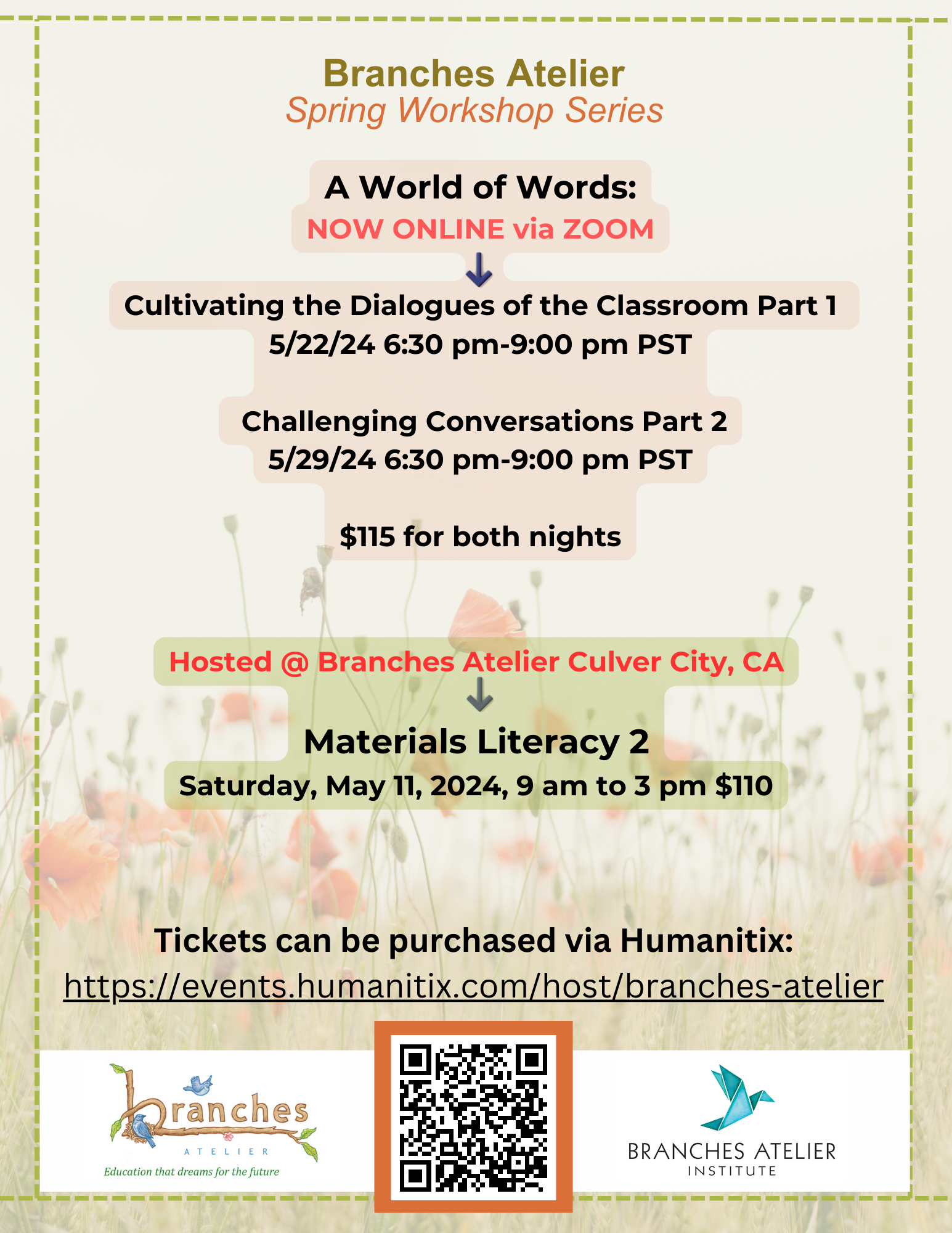
Greetings all, many of you had reached out requesting that we offer this series online. We have changed the dates and can now offer this series via Zoom.
A World of Words: Cultivating the Dialogues of the Classroom Part 1
Wednesday, May 22nd 6:30pm-9 pm.
Challenging Conversations Part 2
Wednesday, May 29th 6:30pm-9 pm.
presented by Patricia Hunter McGrath and Christina Bianchi
A World of Words: Cultivating the Dialogues of the Classroom Part 1
Wednesday, May 22nd 6:30pm-9 pm.
In the immersive realm of childhood education, fostering meaningful conversations with children is not just about communication; it’s about building a world of words where language thrives as the third teacher. Come join Branches Atelier as we delve into this vital aspect of early learning, exploring the significance of dialogic speaking and reflective conversations, building community through dialogue, and supporting our teachers and children in embracing language as a fundamental tool for growth and understanding.
Key Ideas Discussed:
Dialogic Speaking.
Language as an aspect of the Third Teacher.
Reflective conversations with children.
The role that materials play in sparking dialogues.
Supporting colleagues and creating a learning community.
It’s not just about questions; it’s about curiosity! Conversations with children are more than just words—they are windows into a world of wonder, curiosity, and connection. By embracing language as the third teacher, engaging in dialogic speaking, facilitating reflective time and conversations, and supporting new teachers in this journey, we cultivate an environment where language flourishes, minds expand, and hearts unite in the joy of learning.
A World of Words : Challenging Conversations Part 2
Wednesday, May 29th 6:30pm-9 pm.
As adults in the lives of young children, many topics arise that we consider challenging. From death to gun violence, from exclusion and power play and challenging behaviors, we can often find ourselves at a loss for words. At the same time, these topics are wonderful opportunities to help children process and understand the complexities of our world and can offer amazing and rich threads to be explored.
Join us as we consider how to address and understand complex social and emotional issues in the lives of children. Build your toolkit as we reflect on the importance of creating a safe and inclusive environment, setting strong boundaries, and fostering emotional literacy and social awareness when dealing with both expected and unexpected challenges. Learn how to approach these issues with sensitivity, nurturing, and an open mindset, and to celebrate diversity and build connections among all people.
Key ideas discussed:
How to support students when they share personal experiences and emotions related to these topics, including sadness, anger, and frustration?
How to emphasize emotional literacy, social justice, and empathy in children’s education while still retaining joy, community building, and the delight of being in dialogue?
How to create a culture of curiosity?
How to difficult conversation can become lines of classroom inquiry?
As before, it’s not just about knowing what to say; It’s not just about questions, it’s about curiosity! Conversations with children are more than words— together, we cultivate an environment where language flourishes, minds expand, and hearts unite in the joy of learning.
Greetings all, many of you had reached out requesting that we offer this series online. We have changed the dates and can now offer this series via Zoom.
A World of Words: Cultivating the Dialogues of the Classroom Part 1
Wednesday, May 22nd 6:30pm-9 pm.
Challenging Conversations Part 2
Wednesday, May 29th 6:30pm-9 pm.
presented by Patricia Hunter McGrath and Christina Bianchi
A World of Words: Cultivating the Dialogues of the Classroom Part 1
Wednesday, May 22nd 6:30pm-9 pm.
In the immersive realm of childhood education, fostering meaningful conversations with children is not just about communication; it’s about building a world of words where language thrives as the third teacher. Come join Branches Atelier as we delve into this vital aspect of early learning, exploring the significance of dialogic speaking and reflective conversations, building community through dialogue, and supporting our teachers and children in embracing language as a fundamental tool for growth and understanding.
Key Ideas Discussed:
Dialogic Speaking.
Language as an aspect of the Third Teacher.
Reflective conversations with children.
The role that materials play in sparking dialogues.
Supporting colleagues and creating a learning community.
It’s not just about questions; it’s about curiosity! Conversations with children are more than just words—they are windows into a world of wonder, curiosity, and connection. By embracing language as the third teacher, engaging in dialogic speaking, facilitating reflective time and conversations, and supporting new teachers in this journey, we cultivate an environment where language flourishes, minds expand, and hearts unite in the joy of learning.
A World of Words : Challenging Conversations Part 2
Wednesday, May 29th 6:30pm-9 pm.
As adults in the lives of young children, many topics arise that we consider challenging. From death to gun violence, from exclusion and power play and challenging behaviors, we can often find ourselves at a loss for words. At the same time, these topics are wonderful opportunities to help children process and understand the complexities of our world and can offer amazing and rich threads to be explored.
Join us as we consider how to address and understand complex social and emotional issues in the lives of children. Build your toolkit as we reflect on the importance of creating a safe and inclusive environment, setting strong boundaries, and fostering emotional literacy and social awareness when dealing with both expected and unexpected challenges. Learn how to approach these issues with sensitivity, nurturing, and an open mindset, and to celebrate diversity and build connections among all people.
Key ideas discussed:
How to support students when they share personal experiences and emotions related to these topics, including sadness, anger, and frustration?
How to emphasize emotional literacy, social justice, and empathy in children’s education while still retaining joy, community building, and the delight of being in dialogue?
How to create a culture of curiosity?
How to difficult conversation can become lines of classroom inquiry?
As before, it’s not just about knowing what to say; It’s not just about questions, it’s about curiosity! Conversations with children are more than words— together, we cultivate an environment where language flourishes, minds expand, and hearts unite in the joy of learning.
presented by Patricia Hunter McGrath and Christina Bianchi
Unlock the transformative power of documentation and design in early childhood education with a three part workshop on documentation and design. This workshop is designed specifically for teachers and educators, this dynamic experience will equip you with the knowledge, skills, and inspiration to create rich and meaningful documentation, hone your expertise in observation, making children’s learning visible and revisit design concepts that emphasize these ideas.
Workshop Highlights:
Understanding Documentation: Understanding the philosophy and principles of documentation in our context.
Gain insights into creating visual tools that that foster curiosity, exploration, and collaboration.
Develop practical skills in observing children’s play and activities. Learn how to document these observations in a way that honors children’s unique voices and learning styles.
Visual Storytelling: Dive into the world of visual storytelling through photographs, videos, and written narratives. Discover how these tools can amplify the impact of your documentation and engage parents and caregivers.
Collaborative Learning: Engage in collaborative discussions and activities with fellow educators, sharing experiences, challenges, and success stories.
Build a supportive community of like-minded professionals.
Who Should Attend:
These workshops are ideal for educators, teachers, parents and administrators with children from infancy through early childhood. Whether you’re new to the Reggio Emilia approach or looking to deepen your understanding, this workshop offers valuable insights and practical tools that can be applied at home or school.
Saturday, February 10th, 2024, 9 am to 3 pm Cost: $110, includes light breakfast
Presented by Christina Bianchi and Patricia Hunter McGrath
Our new Branches Atelier workshop, Materials Literacy: Creating Strong Foundations, is designed for teachers, parents, and new atelieristas as a comprehensive introduction to the vital role of materials in early childhood education.
Rather than focusing on individual materials, this day-long workshop aims to deepen educators’ understanding of how to introduce new materials effectively, emphasizing the importance of caring for these materials as a fundamental aspect of their development into a language for children.
Together, we will explore properties and attributes that come into play when choosing materials to support children in making connections and building relationships.
Key Topics Discussed:
How are new materials introduced in the classroom? By delving into strategies for introducing new materials in the classroom, participants will engage in hands-on activities and discussions to explore the significance of the initial introduction, considering factors such as cultivating an inquiry, making age-appropriate choices, and fostering curiosity.
How is caring for the materials essential to becoming a language?
What is the difference between developing an alphabet of materials and accessing them to develop thinking?
What does a materials-rich environment look like at different stages of development?
Key Takeaways:
Participants will discuss a nuanced understanding of the role of materials in early childhood settings.
Develop strategies for introducing and caring for materials, emphasizing their significance as a language for children.
Highlight the difference between providing materials and using them to stimulate critical thinking.
Cultivate practical approaches to integrating materials into long-term inquiries were discussed.
Gain insights into creating a materials-rich environment that evolves with children’s development.
Join us for a rich and immersive adult experience, equipping ourselves with the tools and insights to create dynamic, engaging, and developmentally appropriate learning environments for young children.
2) Viewing The World Through Their Lens: A Journey Through Photography and Transformation
Saturday, February 17th, 2024, 9 am to 3 pm Cost: $110, includes light breakfast
Presented by Christina Bianchi and Patricia Hunter McGrath
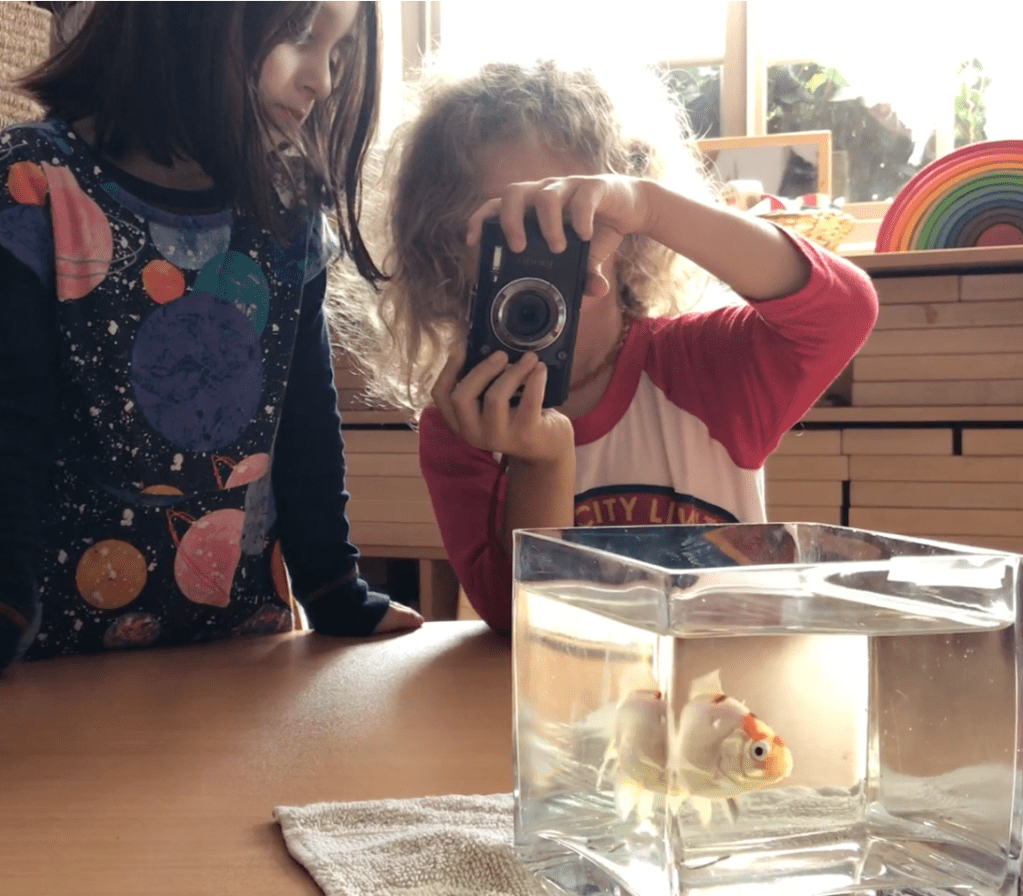
Join Branches Atelier in an exploration of integrating photography into our experiences with young children.
This workshop delves into various vital concepts, offering participants a rich inquiry into how photography can be a powerful tool for both adult’s and children’s teaching and learning.
Key Questions:
How do you introduce the language of photography to children?
How do we take great photos?
How can photographs help to tell a story?
What is the language of creative photography, and how does this language support children’s imagination and relationships?
How is photography used to represent children’s ideas and uncover children’s theories?
What materials can we introduce to transform our images?
How does photography alter our understanding of the world?
How do we play with transformation through digital and artistic materials?
Key Takeaways:
This workshop will discuss practical strategies and the philosophical ideas underlying how we work with children to manipulate images, negotiate perspectives, and illuminate challenges. In addition to practical considerations, we will also reflect on strategies for fostering dialogue and encouraging children to articulate their thoughts and feelings about the images they encounter and create.
What was once primarily considered a tool for teachers, documentation in our classrooms has become an essential instrument for communication, storytelling, and creation in our classrooms.










 Reggio Inspirations